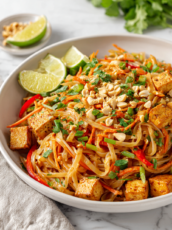
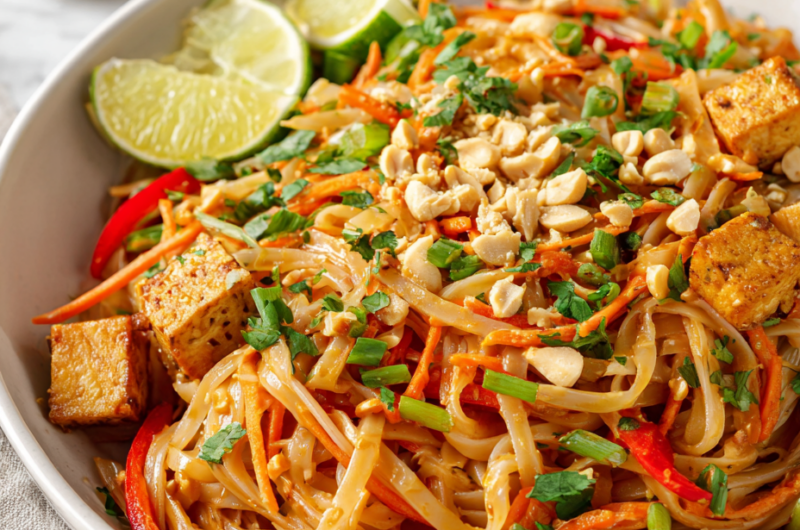
Recreating the street-food magic of Pad Thai without fish sauce or eggs has been my recent kitchen obsession. It’s a puzzle, trying to balance that smoky, tangy, sweet vibe with only plant-based ingredients, but it’s so worth the effort. Every time I nail that first bite, I feel like I’ve captured a little piece of Bangkok’s bustling alleyways right in my own bowl.
This dish isn’t just about mimicry; it’s about honoring the flavors I love while making it accessible and kind to the planet. I’ve learned that with the right tweaks—like a splash of tamarind and a pinch of smoked paprika—you can get pretty close to that authentic street-food feel. It’s honestly a messy, noisy process, but the results are honest and deeply satisfying.
Cooking vegan Pad Thai isn’t just a nostalgic trip—it’s a small rebellion against the usual takeout. It’s quick to make, full of bold flavors, and lets me feel a little more in control of what I’m eating. Plus, it’s a reminder that plant-based can be vibrant, messy, and totally crave-worthy, even without the traditional fish sauce or eggs.
Focusing on how to recreate the nostalgic, street-food vibe of traditional Pad Thai using entirely plant-based ingredients, with an emphasis on balancing authentic flavors and textures without fish sauce or eggs.
The story behind this recipe
One rainy afternoon, I was craving something vibrant and comforting, but all I had were a few ingredients and a stubborn craving for authenticity. I started tinkering with flavors I remembered from street stalls in Bangkok—tangy tamarind, smoky paprika, and crunchy peanuts. That day, I realized how much I missed the messy, lively flavor of real Pad Thai, and I wanted to create a version that felt just as alive but completely plant-based. It’s become a dish I turn to when I need a quick, honest meal that celebrates bold flavors without fuss.
Key ingredients and tips
- Rice noodles: I prefer the chewy, slightly sticky texture of traditional rice noodles—they soak up flavors beautifully. Swap with kelp noodles if you want a lower-carb option, but expect a different bite.
- Tamarind paste: It’s the tangy backbone of this dish, with a bright, lemon-bright punch. If you can’t find it, a mix of lime juice and a splash of molasses can mimic the depth, but it won’t have that true tamarind’s oozy richness.
- Tofu: Crispy, golden tofu adds a satisfying crunch. Firm or extra-firm tofu works best; press out excess moisture so it crisps up nicely. For a softer bite, try silken, but it won’t hold its shape as well.
- Peanut butter: I love the creamy, nutty richness it brings, almost like a secret sauce. Use natural peanut butter for that fresh, roasted flavor—skip the sugary ones if you want a more authentic, less cloying taste.
- Smoked paprika: It’s my secret weapon for smoky depth—just a pinch transforms the whole dish. If you don’t have it, a dash of liquid smoke works, but be conservative. It’s all about that subtle, smoky aroma.
- Green onions: Fresh and sharp, they add a bright contrast. Chop them finely and sprinkle just before serving to keep their crisp bite. If you’re out, a handful of chopped chives works almost as well.
- Crushed peanuts: For that final crunch and salty punch, I toast mine lightly to enhance flavor. If you’re allergic or out, toasted sunflower seeds make a decent stand-in, but they won’t have the same nutty aroma.
Spotlight on key ingredients
Rice noodles:
- I love their chewy, slightly sticky bite—they soak up sauces beautifully. Swap with kelp noodles if you’re low-carb, but expect a different texture.
- Tamarind paste: It’s the tangy backbone, with a bright, lemon-bright punch. If unavailable, lime juice and a touch of molasses can mimic the flavor, but it lacks that oozy richness.
Tofu & Peanut Butter:
- Tofu: Crispy, golden, and satisfying, it gives that much-needed crunch. Use firm or extra-firm, press out excess moisture for the best crispness. Silken tofu can soften the dish but won’t hold shape.
- Peanut butter: Adds a creamy, nutty richness that feels like a secret sauce. Natural, unsweetened peanut butter works best; skip sugary versions for a cleaner, more authentic flavor.
Ingredient Swap Tips
- Rice Noodles: I love the chewy, slightly sticky texture—they soak up flavors like a sponge. Swap with kelp noodles for a lower-carb version, but expect a different bite and less chew.
- Tamarind Paste: It’s the tangy core of this dish, with that bright, lemon-bright punch. If you can’t find it, try a mix of lime juice and a tiny splash of molasses, but it won’t quite have that oozy, complex depth.
- Tofu: Crispy, golden tofu adds crunch and richness. Use firm or extra-firm, press out moisture well. Silken tofu can be softer but won’t hold its shape—more like a creamy topping.
- Peanut Butter: The nutty, creamy element brings a secret richness. Natural, unsweetened peanut butter is best—skip the sugary kind, or it’ll skew the flavor and make it cloying.
- Smoked Paprika: Adds that subtle smoky aroma—just a pinch. If you don’t have it, liquid smoke (a few drops) can work, but go easy—too much can overpower the dish.
- Green Onions: Bright and sharp, they lift the dish with their fresh bite. Chop finely and sprinkle on top just before serving to keep their crispness. Chives are a decent substitute if needed.
- Crushed Peanuts: For crunch and salty punch, toast lightly to enhance flavor. If allergic or out, toasted sunflower seeds can mimic the crunch, but won’t have the same nutty aroma.
Equipment & Tools
- Large wok or wide skillet: For stir-frying everything evenly and quickly.
- Tongs: To toss and turn ingredients without breaking them.
- Small bowl: To whisk together the sauce ingredients.
- Measuring spoons: To measure precise amounts of sauces and seasonings.
- Spatula: To stir, scrape, and toss ingredients during cooking.
Step-by-step guide to vegan Pad Thai
- Gather all equipment: a large wok or wide skillet, tongs, a small bowl, measuring spoons, and a spatula. Have your noodles, tofu, and sauce ingredients ready before starting.
- Cook the rice noodles: bring a large pot of water to a boil (about 100°C/212°F). Add noodles and cook according to package instructions, usually 8-10 minutes, until just tender. Drain and rinse with cold water to stop the cooking. Set aside.
- Prepare the tofu: press excess moisture out of the tofu for at least 10 minutes. Cut into small cubes. Heat 1-2 tbsp oil in the wok over medium-high heat (around 180°C/356°F). Add tofu and fry, turning occasionally, until golden and crispy, about 5-7 minutes. Remove and set aside.
- Make the sauce: in a small bowl, whisk together 3 tbsp tamarind paste, 2 tbsp soy sauce or coconut aminos, 1 tbsp maple syrup, 1 tsp smoked paprika, and a squeeze of lime juice. Adjust sweetness or acidity to taste. Set aside.
- Stir-fry aromatics: add a splash of oil to the wok if needed. Toss in 2 minced garlic cloves and 1 tbsp grated fresh ginger. Cook for about 30 seconds until fragrant, smell should be spicy and bright.
- Cook the vegetables: add sliced green onions, shredded carrots, and bean sprouts. Stir-fry for 2-3 minutes until slightly softened, but still crisp. The aroma should be fresh and slightly sweet.
- Combine everything: add the cooked noodles and tofu back to the wok. Pour over the sauce. Toss everything together over medium heat for 2-3 minutes. Look for noodles coated and slightly glossy, with a fragrant smoky aroma.
- Finish and serve: sprinkle with crushed peanuts and chopped fresh cilantro. Serve immediately, garnished with lime wedges. The noodles should be hot, slightly sticky, and bursting with flavor.
Serve immediately while hot. Garnish with crushed peanuts, chopped fresh cilantro, and lime wedges for added brightness. No resting needed—go straight to plate.
How to Know It’s Done
- Noodles are tender but not mushy, with a slight chew.
- Tofu is crispy and golden, with no excess moisture.
- Sauce coats the noodles evenly, with a balanced tang, smoky, and sweet flavor.
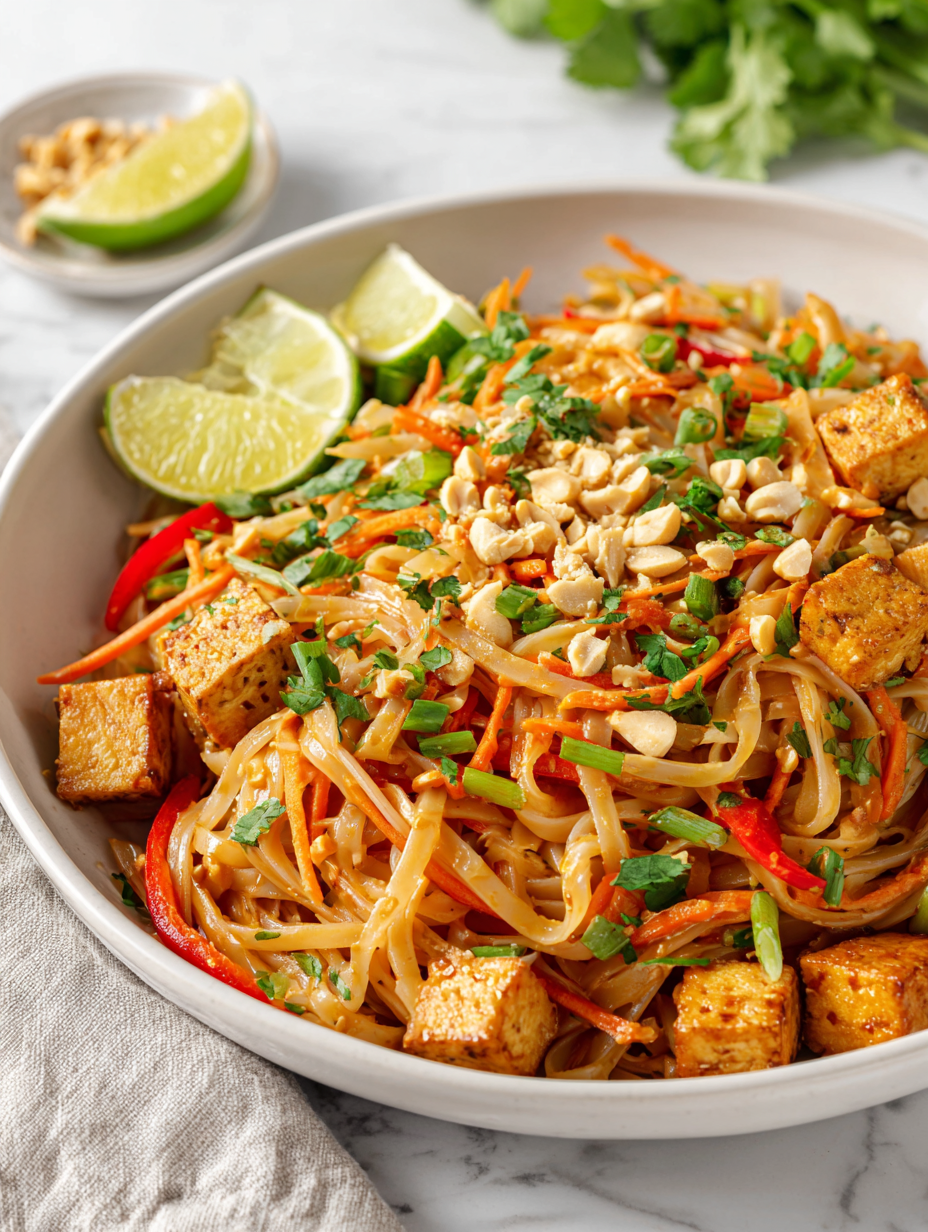
Vegan Pad Thai
Ingredients
Equipment
Method
- Bring a large pot of water to a boil and cook the rice noodles according to package instructions, usually 8-10 minutes, until just tender. Drain and rinse with cold water to stop the cooking process, then set aside.
- Press the tofu to remove excess moisture, then cut into small cubes. Heat 1 tablespoon of oil in your wok or skillet over medium-high heat. Add the tofu and fry, turning occasionally, until golden and crispy on all sides, about 5-7 minutes. Remove and set aside.8 oz rice noodles
- In a small bowl, whisk together tamarind paste, soy sauce, maple syrup, smoked paprika, and lime juice to create your stir-fry sauce. Adjust the flavors to taste and set aside.8 oz rice noodles
- Add the remaining oil to the wok and heat until shimmering. Toss in the minced garlic and grated ginger, cooking for about 30 seconds until fragrant and slightly sizzling.8 oz rice noodles
- Add the shredded carrots and bean sprouts, stir-frying for 2-3 minutes until slightly softened but still crisp. You’ll notice a fresh aroma and vibrant colors.8 oz rice noodles
- Return the crispy tofu to the wok and add the cooked noodles. Pour the prepared sauce over the mixture, tossing everything together quickly over medium heat until well coated and heated through, about 2-3 minutes. The noodles should be glossy and fragrant, with a smoky aroma filling the air.8 oz rice noodles
- Sprinkle the chopped green onions and crushed peanuts over the top. Give everything a final gentle toss to combine flavors and textures.8 oz rice noodles
- Serve hot, garnished with lime wedges for extra brightness. Enjoy the vibrant, flavorful, and plant-based take on street-food classic Pad Thai!
Tips & Tricks for Perfect Pad Thai
- Bolded mini-head: Use high heat to quickly sear tofu until golden, locking in crispness and flavor.
- Bolded mini-head: Toast crushed peanuts just before adding to boost their nutty aroma and crunch.
- Bolded mini-head: Rinse noodles with cold water after boiling to stop cooking and maintain chewy texture.
- Bolded mini-head: Toss ingredients swiftly in the wok to prevent sticking and ensure even coating of sauce.
- Bolded mini-head: Adjust tamarind and lime to balance tang, aiming for a bright, zesty punch with each bite.
- Bolded mini-head: Keep your wok hot enough to crackle ingredients but not so hot they burn instantly.
- Bolded mini-head: Add green onions at the end for maximum freshness and sharp contrast to rich flavors.
Common mistakes and how to fix them
- FORGOT to adjust heat → Keep the pan at medium-high for crisp tofu.
- DUMPED sauce too early → Add sauce just before serving for freshness.
- OVER-TORCHED noodles → Rinse immediately if noodles start to stick or burn.
- MISSED resting time → Let the dish sit 2 minutes after tossing to meld flavors.
Quick Fixes and Pantry Swaps
- When noodles stick, splash hot water to loosen and prevent clumping.
- If tofu isn’t crispy enough, increase heat and cook longer, watching for golden edges.
- DUMPED too much sauce? Patch with a splash of water and toss quickly to dilute excess.
- Splash a little lime juice if the dish feels dull; it brightens flavors instantly.
- When in doubt, swap out peanuts for toasted sunflower seeds for crunch and nutty aroma.
Prep, store, and reheat tips
- Cook the rice noodles ahead: rinse and toss with a little oil to prevent sticking. Store in an airtight container in the fridge for up to 2 days. When reheating, toss in hot water briefly to revive their chewy texture and avoid mushiness.
- Prepare the sauce in advance: whisk together tamarind, soy, maple, and smoked paprika. Keep refrigerated for up to 3 days. Reheat gently in a small saucepan, stirring until warm and fragrant, with the tang still lively.
- Press and cube the tofu ahead: press for at least 10 minutes, then fry until crispy. Store in an airtight container in the fridge for up to 2 days. Reheat in a hot skillet until warmed through and crisp again—listen for that satisfying crackle.
- Chop green onions and other fresh toppings early: store separately in airtight containers. Add just before serving to maintain their bright, crisp bite and prevent wilting. The aroma of fresh greens adds a lively contrast when plated.
- Leftovers keep well for up to 2 days in the fridge. The flavors deepen slightly, especially the sauce, so expect a more concentrated tang and smoky aroma. Reheat in a hot skillet or microwave, adding a splash of water or lime juice if it thickens or dulls in flavor.
Top questions about vegan Pad Thai
1. Can I use soft tofu instead?
Use firm or extra-firm tofu, pressed well to remove moisture, then fry until golden and crispy for authentic texture.
2. What if I can’t find tamarind paste?
Tamarind paste gives that bright, tangy flavor. If unavailable, mix lime juice with a tiny bit of molasses for similar acidity.
3. How do I prevent noodles from sticking together?
Cook noodles al dente, then rinse with cold water to stop cooking and keep them chewy but not mushy.
4. How do I know if the sauce is right?
Adjust the sauce with lime and tamarind to get the perfect balance of tang and sweetness. Taste as you go.
5. Can I make the dish ahead of time?
Toast crushed peanuts lightly just before adding for maximum aroma and crunch. Store leftovers in an airtight container for up to 2 days.
6. What’s a good substitute for smoked paprika?
Use smoked paprika to add smoky depth. A few drops of liquid smoke can substitute if you don’t have it, but keep it subtle.
7. How can I make my tofu extra crispy?
Ensure tofu is pressed and cooked at medium-high heat to get that crispy exterior. Overcrowding the pan can cause steaming instead.
8. Should I cook the green onions with the vegetables?
Add chopped green onions at the end for a fresh, sharp contrast. Keep them separate until serving to maintain crispness.
9. How do I reheat leftovers without losing texture?
If noodles become mushy when reheating, toss them in hot water briefly or reheat in a hot skillet to revive chewiness.
10. Can I add fish sauce for more authentic flavor?
Keep a jar of vegan-friendly fish sauce alternatives or soy sauce ready for quick adjustments to flavor balance.
This vegan Pad Thai isn’t just about copying street food; it’s about capturing a feeling, a smoky, tangy, satisfying bite that feels honest. It’s messy, loud, and a little chaotic—just like those alleyway stalls in Bangkok. When I make it, I’m reminded that good food doesn’t need fish sauce or eggs to be deeply flavorful.
In the end, it’s a simple dish that celebrates bold, plant-based flavors. It’s quick, forgiving, and perfect for those nights when I want something familiar but fresh. Sometimes, the best meals are the ones that remind us how much flavor can come from just a handful of honest ingredients.

Hi, I’m Harper Evans. Welcome to Crushing These Flavors, my home on the internet where curiosity, comfort, and a deep love for food come together. I’m a passionate food blogger who believes great meals are built through attention, practice, and a willingness to experiment.