On those frantic days when time slips away but I still need to feel grounded, this lentil vegetable soup is my fallback. It’s honest, filling, and comes together faster than I expect, especially if I prep some ingredients earlier. There’s a warm, earthy smell that fills the kitchen as everything simmers, grounding me amid chaos.
What I love most is how adaptable it is—whatever veg I have in the fridge, toss it in. It’s a reminder that nourishing yourself doesn’t need fancy ingredients or hours of effort. Just a pot, some lentils, and a moment to breathe, even in the busiest times.
Focusing on how this lentil vegetable soup can be a comforting, nutritious antidote to busy, chaotic days when time is tight but you still crave something homemade and grounding.
The comforting simplicity of lentils
- This soup always takes me back to my grandma’s kitchen, where the smell of lentils simmering filled the air with a cozy, familiar warmth.
- There’s a quiet pride I feel when I turn a simple pot of vegetables and lentils into something hearty and nourishing on a busy weeknight.
- It’s oddly satisfying how a handful of ingredients can come together to create a dish that feels like a warm hug after a long day.
- I get a little thrill from experimenting with different spices and veggies, making this soup a canvas for my mood and pantry.
- Honestly, nothing beats the comfort of a steaming bowl, especially when it’s packed with textures that melt and bite in all the right places.
The story behind this recipe
This soup is born from a moment of realizing how powerful a simple, humble dish can be. I was feeling overwhelmed, juggling too many things, but I wanted something nourishing that wouldn’t demand hours in the kitchen. One rainy afternoon, I threw together what I had—lentils, leftover veg, some spices—and it turned into this warm, forgiving bowl. It’s become my go-to when I need comfort, a reminder that good food doesn’t have to be complicated.
Historical and cultural roots
- Lentils have been a staple in human diets for over 8,000 years, with origins tracing back to ancient Mesopotamia.
- This humble legume was prized by Romans and Egyptians alike, often symbolizing sustenance and resilience.
- In many cultures, lentil soups are linked to new beginnings, eaten on New Year’s for luck and prosperity.
- The simplicity of lentils made them accessible across centuries, nourishing peasants and kings without fuss.
- Today, this dish echoes centuries of wisdom—use what’s in the fridge, make something nourishing and honest.
Ingredient breakdown: key components
- Lentils: I love how they break down into a creamy, earthy base; you can swap for split peas if you prefer a softer texture.
- Carrots: Their natural sweetness brightens the broth and adds a gentle crunch; try parsnips for a more pungent, sweet note.
- Onions: They create a foundational aroma that’s warm and inviting; shallots can replace if you want a milder, sweeter layer.
- Celery: It offers a subtle, crisp freshness; fennel bulb can give a slightly anise-y twist that’s unexpected but lovely.
- Vegetable broth: I prefer homemade for depth, but store-bought works fine; opt for low-sodium if you want control over salt.
- Olive oil: It brings a rich, fruity undertone; toasted sesame oil can add a smoky, nutty aroma if you’re feeling adventurous.
- Spices: I keep it simple with cumin and thyme, but a pinch of smoked paprika can lend a smoky warmth that elevates the soup.
Spotlight on key ingredients
Lentils:
- I love how they break down into a creamy, earthy base; you can swap for split peas if you prefer a softer texture.
- Carrots: Their natural sweetness brightens the broth and adds a gentle crunch; try parsnips for a more pungent, sweet note.
- Onions: They create a foundational aroma that’s warm and inviting; shallots can replace if you want a milder, sweeter layer.
Vegetables (Carrots & Onions):
- Carrots: They add a subtle, sweet aroma and a pop of color; using parsnips or sweet potatoes can deepen the sweetness and add richness.
- Onions: Their savory, slightly sweet scent forms the backbone of the broth; shallots bring a mellower note, perfect for a softer flavor.
Notes for ingredient swaps
- Vegetable Broth: I prefer homemade for depth, but store-bought works fine; go for low-sodium to control salt.
- Lentils: Green or brown are classic; red lentils cook faster and break down into a creamier texture, great if you want a softer soup.
- Carrots: Use parsnips for a sweeter, earthier flavor or sweet potatoes for a richer, velvety finish.
- Onions: Shallots add a milder, sweeter aroma; red onions give a sharper, more pungent note if that’s what you crave.
- Olive Oil: Extra virgin provides fruity richness; sesame oil offers a smoky, nutty twist if you’re feeling bold.
- Herbs & Spices: Dried thyme is reliable, but fresh herbs like parsley or cilantro can add brightness at the end; cumin or smoked paprika can add warmth and depth.
Equipment & Tools
- Large heavy-bottomed pot: To evenly distribute heat and hold all ingredients comfortably.
- Wooden spoon: For stirring vegetables and preventing sticking or burning.
- Sharp knife: To dice vegetables precisely and efficiently.
- Chopping board: A stable surface for preparing your vegetables.
- Immersion blender (optional): For blending part of the soup to achieve a creamier texture.
Step-by-step guide to lentil soup
- Gather your equipment: a large heavy-bottomed pot, a wooden spoon, a sharp knife, and a chopping board. The pot needs to be big enough to hold everything comfortably and withstand simmering heat.
- Start by prepping your vegetables: peel and dice 2 carrots, 2 celery stalks, and 1 onion into bite-sized pieces. Set aside. These will form the flavor base of your soup.
- Heat 2 tablespoons of olive oil in the pot over medium heat (around 160°C / 320°F). Once shimmering, add the diced onion. Cook, stirring often, until translucent and fragrant, about 5 minutes. It should smell sweet and rich.
- Add the carrots and celery to the pot. Stir and cook for another 5 minutes, until the vegetables start to soften and release their aroma. You want them to be slightly tender but still holding some bite.
- Pour in 1 liter (4 cups) of vegetable broth. Bring to a gentle simmer over medium heat (around 85°C / 185°F). Add 1 cup of rinsed green or brown lentils. Stir well to combine. If the broth isn’t enough to cover the lentils, add a splash more.
- Lower the heat to maintain a gentle simmer. Cover the pot and cook for 25-30 minutes. During this time, the lentils should become tender and start to break down, thickening the soup. Stir occasionally to prevent sticking.
- Check the soup at 25 minutes. The lentils should be soft and the vegetables tender. The broth should be slightly thickened and fragrant. If the lentils are still firm, cover and simmer for a few more minutes. If it’s too thick, add a splash of broth or water.
- Taste and adjust seasoning with salt, pepper, and a pinch of thyme or cumin if desired. Remove from heat and let sit for 5 minutes to let flavors meld.
- Ladle the soup into bowls. For a smoother texture, use an immersion blender for a quick blitz — just be careful and do it in short bursts. Alternatively, leave it chunky. Finish with a drizzle of olive oil or a squeeze of lemon for brightness.
Let the soup rest for 5 minutes off the heat to allow flavors to settle. Serve hot, garnished with fresh herbs or a splash of good olive oil if desired. For a brighter finish, squeeze a little lemon over each bowl.
How to Know It’s Done
- Lentils are tender and break apart easily when pressed against the side of the pot.
- Vegetables are soft but not mushy, with a bright aroma filling the kitchen.
- Soup has thickened slightly, with a warm, earthy scent and a rich, inviting color.
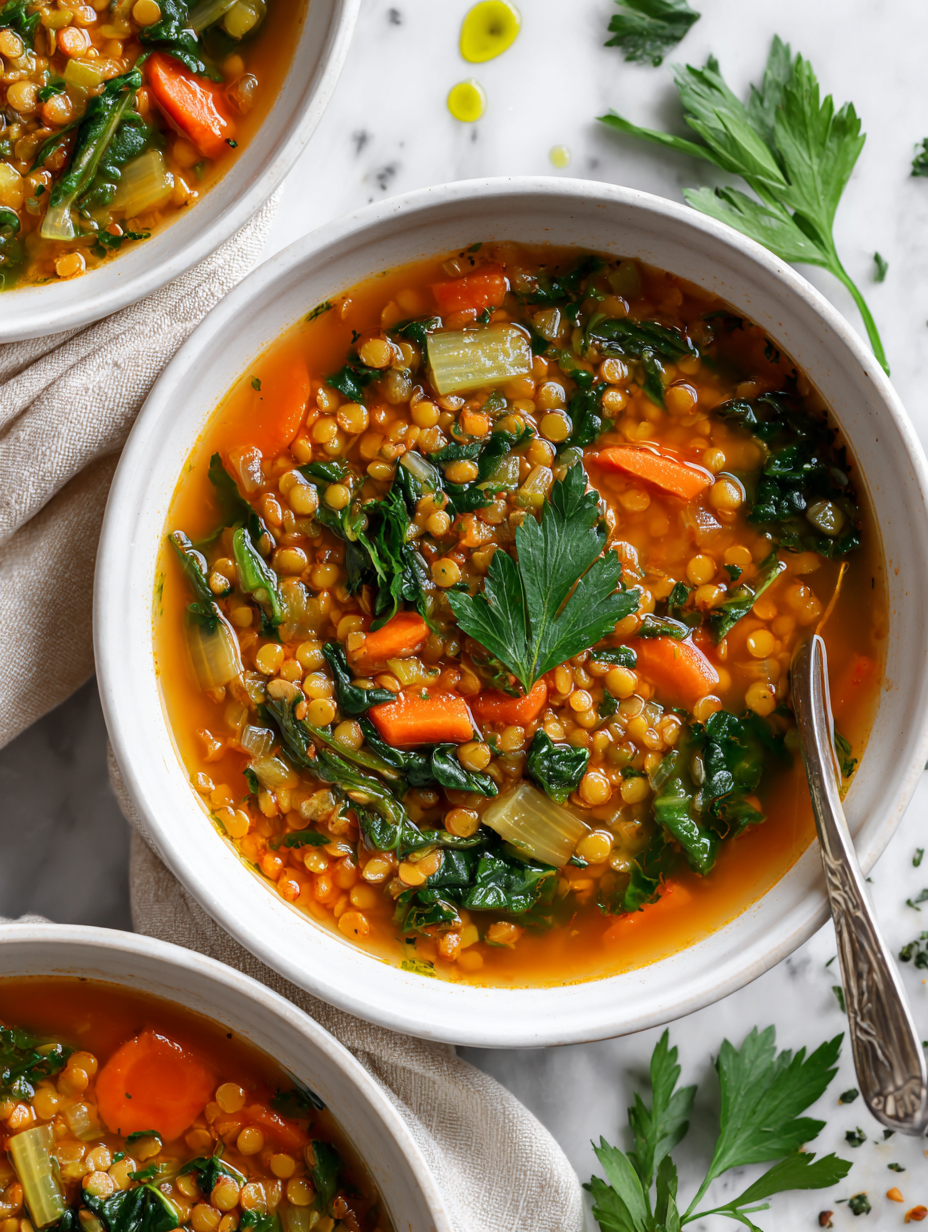
Simple Lentil Vegetable Soup
Ingredients
Equipment
Method
- Begin by rinsing the lentils under cold water until the water runs clear, then set aside.
- Prepare your vegetables by peeling and dicing the carrots, dicing the onion, and chopping the celery into small pieces—this helps everything cook evenly and makes the soup look appealing.
- Heat the olive oil in a large heavy-bottomed pot over medium heat until it shimmers and smells fragrant.
- Add the diced onion to the pot and cook, stirring occasionally, until it becomes translucent and starts to turn a light golden color—this takes about 5 minutes and fills the kitchen with a sweet, savory aroma.
- Stir in the chopped carrots and celery, cooking for another 5 minutes until they soften slightly and their colors brighten, releasing a fresh, earthy scent.
- Pour in the vegetable broth and bring the mixture to a gentle simmer over medium heat. Add the rinsed lentils, stirring to combine everything evenly.
- Lower the heat to maintain a gentle simmer, cover the pot partially, and cook for 25 to 30 minutes, stirring occasionally. The lentils should become tender and start to break down, thickening the soup and filling your kitchen with a warm, earthy aroma.
- Once the lentils are soft and the vegetables are tender, taste the soup and season with salt, pepper, cumin, and thyme. Adjust the seasoning until it’s just right for your palate.
- If you prefer a creamier texture, use an immersion blender to puree part of the soup directly in the pot, blending until smooth but still with some texture remaining. Alternatively, leave it chunky for a rustic feel.
- Turn off the heat and let the soup sit for a few minutes to allow flavors to meld. Serve hot, garnished with a drizzle of olive oil or fresh herbs if you like.
Notes
Tips & Tricks for Perfect Soup
- Use a splash of lemon juice at the end to brighten the earthy tones.
- Rinse lentils thoroughly; it prevents foaming and ensures a cleaner, less murky broth.
- Sauté onions until golden; it adds depth and caramelized sweetness to the base.
- Keep the lid slightly ajar during simmering; it helps control the thickness and concentrates flavors.
- Add salt gradually during cooking; it helps the lentils and vegetables develop better flavor.
- Use a spoon to mash some lentils at the end for a creamier texture without blending everything.
- Toast spices like cumin or thyme briefly in oil before adding liquids; it amplifies their aroma and flavor.
Common mistakes and how to fix them
- FORGOT to taste and adjust seasoning before serving — always do this for maximum flavor.
- DUMPED in all ingredients at once — add vegetables in stages for even cooking and flavor development.
- OVER-TORCHED the lentils — stir frequently to prevent sticking and burning, especially at the start.
- MISSED the resting phase — let the soup sit for 5 minutes after cooking to meld flavors better.
Quick fixes and pantry swaps
- If soup is too thick, splash in hot water and stir to loosen.
- When lentils turn mushy, patch with a handful of fresh lentils and simmer briefly.
- Splash a dash of vinegar or lemon if the broth lacks brightness.
- Shield overcooked vegetables with a lid to prevent further softening.
- Rescue burnt soup by carefully pouring into a new pot, leaving the scorched bits behind.
Prep, store, and reheat tips
- Chop vegetables a day in advance; keep in an airtight container in the fridge for up to 24 hours. The kitchen will smell fresh and earthy when you start.
- Cook the lentils and prepare the soup base up to 2 days ahead. Store in a sealed container in the fridge, where the aroma will deepen overnight.
- Refrigerated soup lasts 3-4 days. As it sits, the flavors meld and intensify, developing a richer, more comforting scent.
- Reheat gently over low heat, stirring occasionally, until steaming and fragrant—about 5-10 minutes. It should shimmer and smell inviting, with no bubbling or scorched notes.
Top questions about lentil soup
1. Should I rinse lentils before cooking?
Rinsing lentils removes surface dust and helps prevent foaming during cooking, keeping the broth clear. Just rinse until the water runs clear.
2. When should I add salt to the soup?
Yes, adding salt during the simmering phase enhances flavor. Wait until the lentils are partially cooked, so they absorb the seasoning better.
3. How do I thin out the soup if it thickens too much?
If the soup is too thick, stir in a bit of hot water or broth until it reaches your preferred consistency. It shouldn’t be gloopy or gluey.
4. How long can I keep lentil soup in the fridge?
Leftovers can be stored in an airtight container in the fridge for up to 4 days. Reheat gently, stirring occasionally, until steaming and fragrant.
5. Can I freeze lentil vegetable soup?
You can freeze the soup for up to 3 months. Let it cool completely before transferring to freezer-safe containers. Thaw overnight in the fridge before reheating.
6. Can I customize the vegetables in this soup?
Yes, you can swap other vegetables like zucchini, kale, or spinach. Adjust cooking times accordingly; greens will wilt quickly at the end.
7. How can I make the soup smoother?
Use a blender or immersion stick to puree part of the soup for a creamier texture. Be cautious with hot liquids—blend in short bursts.
8. How do I avoid overcooking the lentils?
Overcooking lentils can turn them mushy and dull the flavor. Keep an eye on the texture, and taste test before removing from heat.
9. How do I add brightness to the soup?
Adding a squeeze of lemon juice or a splash of vinegar brightens up the earthy flavors just before serving.
10. What can I do if the soup tastes bland?
If the soup tastes flat, try adjusting with extra salt, a dash of spice, or a drizzle of good olive oil for richness.
This soup isn’t just about filling bellies; it’s about reclaiming a moment of calm in a busy day. The simple act of simmering lentils and vegetables fills the house with a warm, earthy aroma that feels like a small victory.
In times when I need nourishment that’s honest and straightforward, this dish reminds me that good food can come from the most humble ingredients. It’s a steady, grounding presence that I keep coming back to, season after season.

Hi, I’m Harper Evans. Welcome to Crushing These Flavors, my home on the internet where curiosity, comfort, and a deep love for food come together. I’m a passionate food blogger who believes great meals are built through attention, practice, and a willingness to experiment.