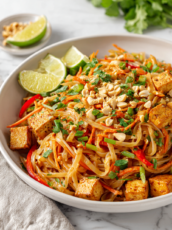
Vegan paella might seem like a twist on tradition, but it’s honestly about capturing that smoky, saffron-infused warmth without relying on seafood. I started experimenting with smoked paprika and some clever veggie swaps, and suddenly, it felt like I was back in Spain, sitting by the coast, inhaling that briny sea air. It’s surprising how a few tweaks can make the familiar feel new again.
This dish is more than just a meatless version; it’s about reimagining comfort food with what’s in your pantry. I love the way the rice soaks up all those smoky, lemon-bright flavors, and how the textures come together—crisp edges, tender veggies, a little bite of saffron aroma. It’s a messy, honest process, but every spoonful feels like a small victory—vegan or not, it’s deeply satisfying.
Focusing on the unexpected use of smoked paprika and saffron substitutes to mimic traditional seafood flavors, creating a vegan paella that feels like a sea breeze on your palate. It’s about transforming humble ingredients into a dish that surprises and comforts, even without seafood.
Sea Breeze in Every Bite
- Cooking this makes me feel like I’ve brought a little piece of Spain into my own kitchen, even on busy weeknights.
- There’s a quiet joy in watching the saffron turn the rice a vibrant gold, like a secret spill of sunshine.
- I love how the smoky paprika and tender veggies remind me of seaside markets, even if I’m just at home.
- This dish is a reminder that vegan comfort food can be hearty, bright, and full of surprising depth.
- Sharing this with friends always sparks that moment of ‘Wow, I didn’t miss seafood at all!’
The story behind this recipe
This vegan paella came about during a rainy weekend when I was craving the coastal flavors of Spain but didn’t have seafood or shellfish on hand. I started experimenting with smoky paprika and saffron substitutes, trying to mimic that umami depth that seafood usually brings. It turned into a bit of a kitchen mess, but the aroma of toasted rice, lemon, and smoky spices filled the room and made me realize how much you can evoke a sense of place with just pantry staples. Now, it’s become my go-to for cozy, honest cooking that surprises even the most skeptical eaters.
Historical and Cultural Insights
- Paella originated in Valencia, Spain, as a humble rice dish cooked over open fires with locally available ingredients.
- The addition of saffron, a costly spice, was a sign of prosperity and turned the dish into a symbol of Spanish culinary identity.
- Traditional paella often included seafood, but regional variations also featured rabbit, chicken, and vegetables, reflecting local tastes and resources.
- Vegan adaptations of paella emerged in recent decades as plant-based diets gained popularity, creatively substituting seafood with smoky spices and umami-rich vegetables.
- The name ‘paella’ comes from the Old French word ‘paelle,’ meaning pan, highlighting the dish’s emphasis on its essential cooking vessel.
Key ingredients for flavor and texture
- Rice: I use arborio or short-grain rice for that creamy, slightly chewy bite—skip long-grain, it won’t soak up flavors the same way.
- Saffron: A tiny pinch turns the rice golden and infuses a subtle floral aroma; if you’re out, smoked paprika adds a smoky warmth—just don’t overdo it.
- Bell Peppers: I prefer red and yellow for sweetness and color; char them slightly to release their natural sugars and deepen flavor.
- Tomatoes: Fresh or canned, they add a tangy brightness; I like to cook them down until they’re jammy, which gives depth to the broth.
- Vegetables: Green beans, artichokes, and peas—these add texture and freshness. Keep them slightly crisp for contrast, or cook longer for softness.
- Smoked Paprika: I love its smoky punch—it mimics that seaside smokiness; if you want a milder flavor, go light or mix with regular paprika.
- Vegetable Broth: Use a rich, homemade or store-bought broth. Warm it beforehand so the rice cooks evenly and absorbs all that savory goodness.
Spotlight on key ingredients
Smoked Paprika & Saffron:
- Smoked paprika: I love its oozy, smoky punch—brings that seaside warmth to the dish. Skip if you prefer milder flavors, but don’t underestimate its power.
- Saffron: Tiny threads turn the rice a vibrant gold and fill the kitchen with a floral, slightly honeyed aroma. If you’re out, turmeric can mimic the color, but not the scent.
Notes for ingredient swaps
- Rice: I prefer short-grain or arborio for that creamy, sticky texture. Long-grain won’t soak up the flavors as well, so skip it.
- Saffron: If you don’t have saffron, smoked paprika plus a touch of turmeric can mimic the smoky, golden hue. Use sparingly to avoid overpowering.
- Bell Peppers: Use any color for sweetness and vibrancy. Roasting or charring them slightly boosts their natural sugars and deepens flavor.
- Tomatoes: Fresh or canned work. If using fresh, dice and cook down until jammy—adds richness and a bright tang.
- Vegetables: Green beans, artichokes, peas—swap based on season. Keep some slightly crisp for contrast or cook longer for softer textures.
- Smoked Paprika: It’s key for that smoky depth—if you want milder, start with a small pinch and taste as you go. It’s the backbone of that seaside feel.
- Vegetable Broth: Use homemade if possible, or a good quality store-bought. Warm it first to speed up cooking and maximize flavor absorption.
Equipment & Tools
- Large paella pan or wide skillet: For even cooking and spreading the rice thinly
- Stirring spoon: To stir spices and vegetables without breaking them
- Small bowl: For prepping ingredients and spices
- Ladle or small saucepan: To warm the broth evenly
Step-by-step guide to vegan paella
- Gather all your equipment: a large paella pan or wide skillet, a stirring spoon, and a small bowl for prep. Preheat your vegetable broth until just simmering, about 80°C / 175°F, and keep warm.
- Heat the pan over medium heat (about 180°C / 355°F). Add a splash of oil and toast the chopped bell peppers, onion, and garlic until fragrant and slightly charred, about 5 minutes. They should be tender but still colorful.
- Stir in the smoked paprika and a pinch of saffron (or turmeric if substituting). Cook for 30 seconds until fragrant—smoke should swirl around, and the spices should turn the oil a warm hue.
- Add the rice, spreading it evenly across the pan. Toast for 2-3 minutes, stirring occasionally, until the rice edges are slightly translucent and lightly golden. This step builds flavor.
- Pour in the warm broth, spreading the rice into an even layer. Bring to a gentle simmer. Reduce heat to medium-low (about 150°C / 300°F). Do not stir from now on to develop a crust.
- Add the chopped tomatoes and vegetables like green beans and artichokes. Cook for 15-20 minutes, maintaining a gentle simmer. The rice should absorb most of the liquid, and the edges will start to crackle and brown.
- Check the rice: it should be tender, with a slightly chewy bite. The broth should be mostly absorbed but still moist. If not done, add a splash more broth and cook a few more minutes.
- Once the rice is cooked, turn off the heat. Cover loosely with foil or a clean towel, and let rest for 5 minutes. This allows flavors to meld and rice to finish absorbing any residual moisture.
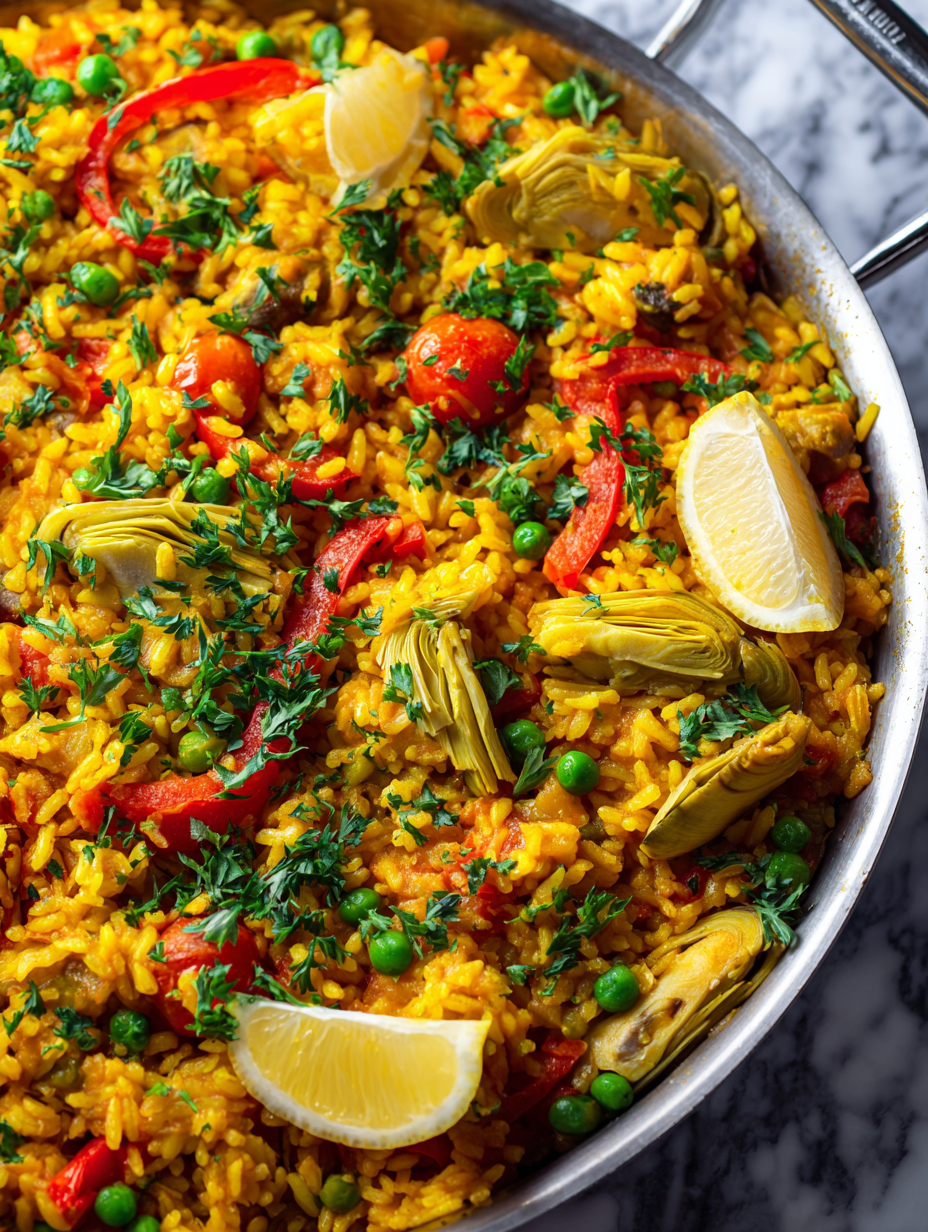
- Uncover, garnish with fresh herbs if desired, and serve straight from the pan. The bottom should have a slightly crispy crust—don’t scrape it off, that’s the best part.
- Checkpoints & How to Know It’s Done:
- The rice is tender but not mushy, with a slight bite.
- The crust on the bottom is golden and crispy, not burnt.
- The broth is mostly absorbed, leaving a moist but not soupy rice.
Let the paella rest uncovered for 5 minutes off heat. Serve straight from the pan, letting everyone dig into the crispy bottom and tender top. Garnish with fresh herbs if you like, and enjoy that smoky, saffron aroma with every bite.
How to Know It’s Done
- Golden, slightly crispy bottom crust
- Rice is tender with a slight chew
- Aroma of smoky spices and saffron throughout
Vegan Paella
Ingredients
Equipment
Method
- Preheat your vegetable broth in a small saucepan until just simmering, keeping it warm for later use.
- Place the bell peppers directly over a gas flame or under a broiler until blackened and charred. Let cool, then peel off the skins and seed. Chop into strips and set aside.
- Heat the large pan over medium heat and add olive oil. Once shimmering, add the chopped onion and cook until translucent and fragrant, about 5 minutes, stirring occasionally.
- Add the minced garlic and smoked paprika to the onions, stirring for 30 seconds until aromatic and the oil turns a warm hue.
- Stir in the rice, spreading it evenly across the pan. Toast for 2-3 minutes until the edges become slightly translucent and golden, releasing a nutty aroma.
- Pour in the warm broth, gently spreading the rice into an even layer. Bring to a gentle simmer and reduce heat to medium-low. Do not stir further to develop a crust.
- Add the chopped tomatoes, green beans, and artichoke hearts to the pan. Cook for 15-20 minutes, maintaining a gentle simmer, until the rice absorbs most of the liquid and the vegetables are tender.
- In the last 5 minutes of cooking, sprinkle the peas over the top. Continue to cook until the rice is tender and the broth is mostly absorbed.
- Turn off the heat, cover the pan loosely with foil or a towel, and let rest for 5 minutes. This helps the flavors meld and creates a crispy socarrat on the bottom.
- Garnish with the charred bell peppers and fresh herbs if desired. Serve straight from the pan, allowing everyone to scoop up the crispy crust and tender rice.
Tips & Tricks for Perfect Paella
- Bolded Mini-Head: Toast the spices briefly before adding rice—this releases their full aroma and depth.
- Bolded Mini-Head: Use a wide pan to ensure even heat distribution—crucial for that crispy bottom crust.
- Bolded Mini-Head: Keep broth warm throughout cooking—adding cold liquid can slow absorption and turn rice gluey.
- Bolded Mini-Head: Don’t stir the rice once broth is added—this helps develop that desirable socarrat (crispy crust).
- Bolded Mini-Head: Check rice texture early—if it’s too firm, add a splash more hot broth and cook a few minutes longer.
- Bolded Mini-Head: Let the paella rest uncovered for at least 5 minutes—this helps flavors meld and crust crisp up.
- Bolded Mini-Head: Finish with a drizzle of good olive oil and fresh herbs—brightens flavors and adds a fragrant finish.
Common mistakes and how to fix them
- FORGOT to check rice texture → test with a spoon, it should be tender but not mushy.
- DUMPED all broth at once → add gradually to control absorption and avoid sogginess.
- OVER-TORCHED the bottom crust → lower heat and add a splash of water if it burns.
- MISSED resting time → let the paella sit off heat for 5 minutes to meld flavors.
Quick fixes and pantry swaps
- When sauce boils over, splash cold water to tame the shimmer and prevent burning.
- If rice sticks, patch with a sprinkle of hot broth and a gentle stir to loosen.
- Splash a little vinegar if the dish smells too smoky, balancing the aroma.
- DUMPED too much broth? Cover and cook on low to let rice absorb excess moisture.
- When bottom gets too dark, shield with foil or add a splash of water to soften the crust.
Prep, store, and reheat tips
- Prep the vegetables and measure spices a day ahead; store in airtight containers in the fridge to save time and keep flavors fresh.
- Cook the rice and assemble the broth mixture up to 24 hours in advance; keep both refrigerated and rewarm before cooking.
- Paella can be stored in an airtight container in the fridge for up to 2 days; reheating will intensify the smoky aroma and mellow flavors.
- Reheat gently on the stovetop over low heat, adding a splash of broth if needed; the rice should be heated through without drying out, and the crust may soften but still be delicious.
Top questions about vegan paella
1. Can I use long-grain rice?
Use short-grain or arborio rice for authentic texture. Long-grain won’t absorb flavors as well, so skip it.
2. What if I don’t have saffron?
Saffron adds a floral, honeyed aroma and vibrant color. If out, smoked paprika and turmeric can mimic some of its warmth.
3. Should I roast the peppers first?
Char the bell peppers until blackened, then peel for a smoky sweetness that deepens the dish’s flavor.
4. Can I add cold broth directly?
Use vegetable broth heated to a gentle simmer before adding to the rice; cold broth can slow cooking and cause mushiness.
5. When should I add the peas?
Add vegetables in stages to keep some crispness—green beans and artichokes last, peas go in near the end.
6. How much smoked paprika should I use?
For a smoky depth, smoked paprika is key. Use sparingly and taste as you go to avoid overpowering.
7. Why rest the paella before serving?
Let the paella rest off heat for 5 minutes before serving to allow flavors to meld and crust to crisp.
8. How do I reheat leftovers?
Reheat gently on the stovetop, adding a splash of broth if needed. The rice should be heated through, and the crust stays crispy.
9. Should I stir the rice during cooking?
To prevent sticking, avoid stirring once the broth is added. Let the rice develop that crispy socarrat naturally.
10. What if the bottom burns?
If the bottom burns, lower the heat immediately and add a little water or broth to soften the crust.
Making this vegan paella feels like a small act of rebellion—replacing seafood with smoky spices and bold vegetables. Each bite carries a bit of seaside nostalgia, even if I’m just in my own kitchen. It’s honest, messy, and somehow feels like a quiet triumph, especially on a busy weeknight.
In the end, this dish reminds me that comfort food doesn’t need to be complicated or seafood-laden. It’s about the smells, the textures, and the simple joy of transforming pantry staples into something surprising. No matter the day, a pan of this paella can turn a regular evening into a little celebration of honest, plant-based cooking.

Hi, I’m Harper Evans. Welcome to Crushing These Flavors, my home on the internet where curiosity, comfort, and a deep love for food come together. I’m a passionate food blogger who believes great meals are built through attention, practice, and a willingness to experiment.